Corinthe Tavern
Les MisérablesCorinthe Tavern is more than a backdrop to the June 1832 uprising: its dim interior becomes a workroom and a point of exposure for the insurgents, as they prepare for an unequal fight and discover that Inspector Javert has entered their ranks under a false identity.
Setting and the Corinthe sequence
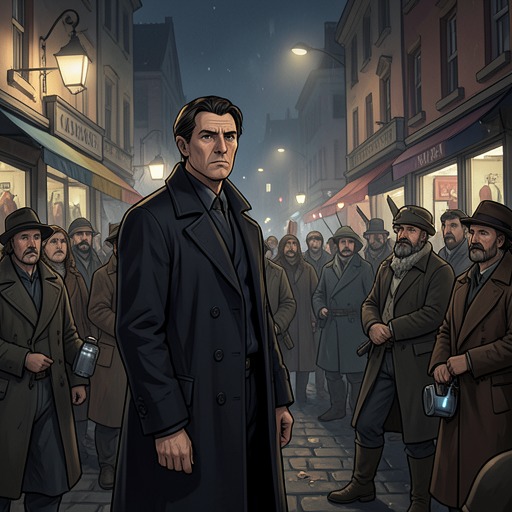
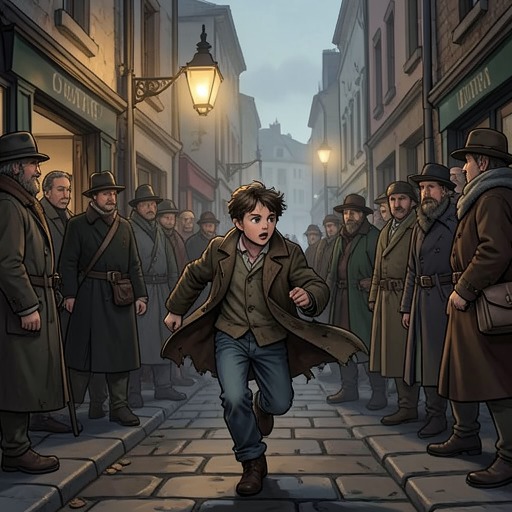
The tavern gives its name to the book’s Corinthe sequence. The action unfolds amid the Paris insurrection of June 5, 1832, as Marius learns that his friends are waiting for him at the barricade on Rue de la Chanvrerie. The group preparing to fight includes Courfeyrac, Bossuet, Combeferre, and their leader, Enjolras; Gavroche is among them as well.
The tavern’s lower room is shown as a practical, improvised space rather than a place of comfort. Gavroche makes cartridges there, by the uncertain light of two candles placed on the counter because gunpowder has been scattered over the tables. The insurgents keep the upper floors dark, so that the candlelight does not show outside. The details make the room’s ordinary furnishings part of the risks and necessities of revolt.
A waiting place under threat
As night falls, the insurgents hear only confused rumors and occasional, distant gunfire. The lull does not reassure them: it suggests that the government is taking time to gather its forces. The scale of the danger is starkly unequal—fifty men wait against sixty thousand. Inside the tavern, Enjolras’s impatience at the threshold of a dangerous engagement draws him toward Gavroche, who is occupied with cartridge-making.
The room is thus tied to both preparation and suspended action. Ammunition is assembled in a space where powder makes even the candles a consideration, while the silence outside leaves the defenders waiting for an attack whose timing they cannot control. The tavern’s enclosed interior concentrates the practical labor and apprehension of the larger street fighting.
Exposure and the wider barricade fight
The Corinthe sequence also brings Inspector Javert’s exposure. When asked his name, he answers, and Enjolras signals four men to seize him before he can turn around. They throw him down, bind and search him. On him they find a round police identification card, sealed between two panes of glass, bearing the French arms and identifying him as a police inspector aged fifty-two. They leave his watch and purse, including several gold coins, with him. The discovery turns the insurgents’ attention from the government forces outside to an infiltrator in their midst.
The tavern’s scenes belong to a broader battle in which the insurgents’ position deteriorates and death appears certain. National Guard uniforms taken from corpses are used to let married men and fathers escape across enemy lines, but there are only four uniforms for five men. Read beside the candlelit cartridge-making and Javert’s capture, this shortage shows how the tavern’s enclosed preparations connect to the barricade’s larger choices: resistance, concealment, and the attempt to save lives under pressure.